Selling perfume looks simple from the outside, but the back office is anything but. You carry dozens of brands, each with multiple sizes and concentrations; you open testers that slowly drain sellable stock; some customers buy full bottles while others want a decant measured in millilitres; and many fragrances ship in batches you may need to trace. A generic retail POS that only counts "one bottle in, one bottle out" can't keep up.
This guide covers what makes perfume retail different and what to look for in a perfume store POS in 2026.
What Makes a Perfume Store POS Different
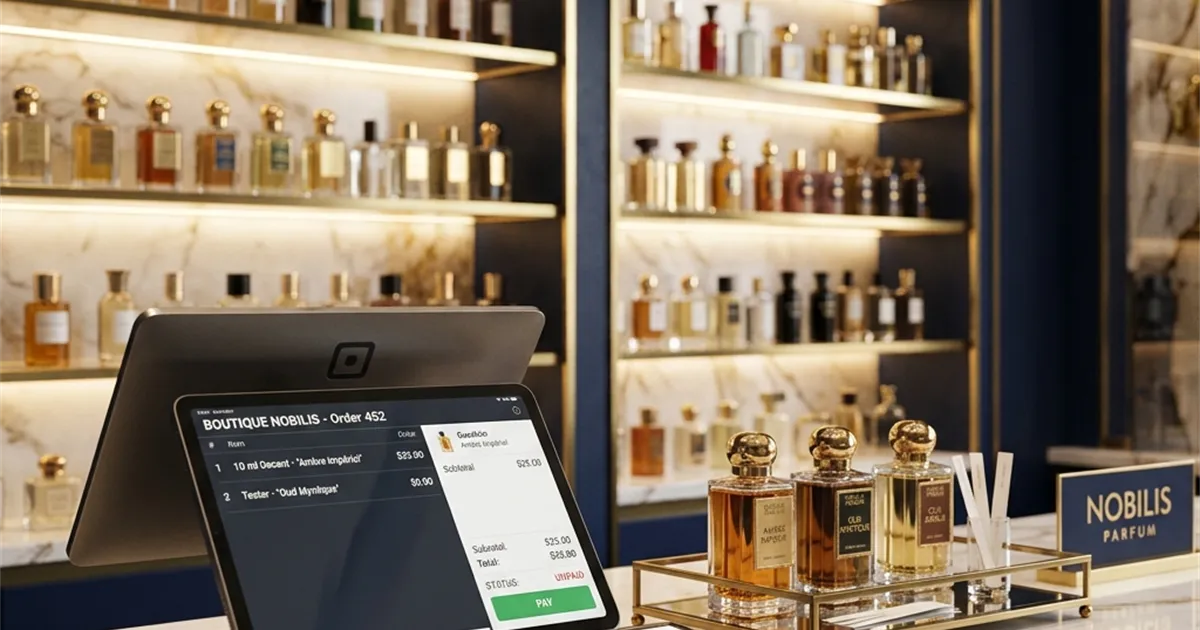
- Tester management: Testers come out of sellable stock but aren't sold. Your POS should track tester units separately so on-hand counts stay accurate.
- Decant & per-ml billing: Selling a 5 ml or 10 ml decant from a larger bottle means billing by volume and deducting that volume from stock — not a whole unit.
- Brand-wise inventory: Customers shop by brand and concentration (EDT, EDP, parfum). Inventory needs to be organized and reportable by brand and variant.
- Batch tracking: For traceability and freshness, tracking batch numbers on incoming stock matters.
- GST / VAT billing: Perfumes carry specific tax treatment — correct HSN codes and GST in India, 5% VAT in the UAE, 20% VAT in the UK.
Key Features to Look For in 2026
1. Tester & Sample Tracking
Every tester opened should be recorded against stock so your sellable count is always right. A POS that lets you mark units as testers keeps inventory honest and shows you the real cost of sampling at month-end.
2. Decant and Per-ML Sales
If you sell decants, the system must bill by millilitre and deduct that volume from the source bottle. This turns a single large bottle into many small, accurately-priced sales without breaking your stock counts.
3. Brand and Variant Inventory
Look for inventory that organizes products by brand, line, and concentration, with reporting that shows your best-selling brands and variants so you can reorder the right stock.
4. Batch Tracking
Recording batch numbers on purchase keeps your stock traceable — useful for freshness, returns, and supplier queries.
5. WhatsApp CRM for Repeat Sales
Fragrance is a repeat purchase. A POS with built-in WhatsApp can remind customers when they're likely running low, announce new arrivals from a brand they buy, and send loyalty offers — all far more effective than email in many markets.
6. Mobile-First Operation
Perfume boutiques are often compact. A POS that runs on a smartphone lets staff assist customers and check stock anywhere on the floor. RetaPOS is cloud-based, so it needs a stable Wi-Fi or 4G/5G connection.
RetaPOS for Perfume Stores
- Tester and sample tracking that keeps sellable stock accurate
- Decant and per-ml billing with volume-based stock deduction
- Brand-wise and variant-wise inventory with best-seller reporting
- Batch tracking on incoming stock
- GST-compliant invoicing for India and VAT for the UAE (5%) and UK (20%)
- Built-in WhatsApp CRM for replenishment reminders and loyalty offers
- Runs on any Android or iOS smartphone — US$399/year (International) or ₹6,000/year (India), all features included
Explore the full RetaPOS Perfume Store POS feature set →
Bottom Line
The best POS for a perfume store in 2026 handles testers, decant and per-ml billing, brand-wise inventory, and batch tracking as first-class features — not workarounds on a generic system — while billing GST or VAT correctly and driving repeat sales over WhatsApp. RetaPOS was built for these requirements. Run a beauty counter too? See our cosmetics & beauty POS guide.